Wednesday, June 15, 2016

There are no words this week

Like all of you I have been horrified and saddened by the shootings in Orlando this week. On Sunday our church will celebrate Pride Week with a special service, that will include a time of mourning.
 In the midst of such horror I am putting up pictures of beauty from my garden in the hopes that it will soothe and calm our souls at this difficult time. There is still love and beauty in creation and in our world
.


Peony in mourning


Thursday, June 9, 2016

I've got PAWPAWS!!! Are you as excited as I am?


My Pawpaw trees arrived this week and I am literally vibrating with excitement. The Pawpaw is an indigenous fruit tree that was used by First Nations and early settlers and is pre-Columbian. But deforestation, urbanization and the arrival of apples, pears and peaches, pushed this plant to the margins and it is rare indeed to see them. Which is sad, as it is the largest fruit tree native to North America.
 I read about the Pawpaw in a book on permaculture called 'Paradise Lot' by Eric Toensmeier. Its about two guys who reclaim an abandoned lot in Massachusetts and turn it into a beautiful permaculture garden. They grew and harvested pawpaw and I was fascinated by this lost treasure of  the North Eastern USA  and Canada.


But lets be clear, a pawpaw is not a papaya .The one on the right is a papaya, its from the tropics. The pawpaw on the left, that looks like it should come from the tropics is from here. It's fruit tastes like a combination of a banana and a mango, with tropical overtones. One of the types I planted; the Susquehanna, has fruit that grows up to 1lb. And they not only taste delicious but are good for you!
 They are a unique plant. Look at the picture of their flowers, aren't they gorgeous?
 All purple and lovely looking. One problem however, they don't use bees to pollinate ( this is an ancient plant). But instead depend on flies and beetles to do the job. Which is why you plant them close together and the flowers perfume is that of slightly rotting meat. Will count on my peonies to counter them! But they recommend that you pollinate them yourself using an artists paint brush.
 The earliest European contact with this fruit goes back to 1541. An article called 'The Pawpaw, a Forgotten North American Fruit Tree' by José I. Hormaza (http://www.arboretum.harvard.edu/wp-content/uploads/2014-72-1-the-pawpaw-a-forgotten-north-american-fruit-tree.pdf) states that:
"The earliest written report of pawpaw was made in 1541 by a Portuguese officer who was a member of Spaniard Hernando de Soto’s expedition through the southeastern United States. He noted Native Americans growing and eating pawpaws in the Mississippi Valley region: “There is a fruit through all the country which groweth on a plant like Ligoacan , which the Indians do plant. The fruit is like unto Peares Riall [“pears royal”]; it has a very good smell, and an excellent taste” Apparently, the name pawpaw was given to the tree by the members of the de Soto expedition for the resemblance of the fruits to the tropical fruit papaya."
So there you have it.
This tree fits in well with what I am trying to build in the back 40. My native plants are thriving, (those that survived the predations of the rabbits), and I am trying to integrate a part of the garden so it reflects what grew here for centuries. I have one part of the garden filled with exotics, but the major part is more and more becoming a native plant sanctuary. Now they say that it will take two years for them to fruit. But given the wisteria miracle, I have hopes for next year! But until then, I will watch them carefully and before you know it, pawpaw smoothies for all!
planted and watered


There is one last benefit to having a pawpaw tree in your garden. Zebra Swallowtail butterfly's. This species is as much a specialist as the Monarch, but instead of milkweed, this creature lays it's eggs on the emerging leaves of a Pawpaw tree. That's it and that's all they will use (http://blueridgediscoveryproject.blogspot.ca/2011/08/connections-pawpaw-tree-and-zebra.html). So if you want to be incredibly butterfly friendly, plant milkweed and pawpaws and you will be blown away by butterfly's. The GTA is the northern edge of their range, so the more of us who plant these, the more Zebra Swallowtails we will see and their numbers will grow.
 

Zebra Swallowtail laying its egg on a Pawpaw leaf
 
 
But of course you want to know where you can find them so you can plant these amazing trees. There were none for sale in the Greater Toronto Area, so I ordered mine from Whiffletree Farm and Nursery (http://www.whiffletreefarmandnursery.ca/home.php. They are in Elora and were great to deal with and delivered them right to the door. You need two of different species for pollination, but they are happy to help and explain to you the wonders of the Pawpaw.
Of course I can't end this without sending you the link to the Pawpaw song! It is an Appalachian folk song. Enjoy and go plant Pawpaws.

Tuesday, June 7, 2016

The Wisteria Miracle and other goings on in the garden


This is a picture of our blooming wisteria, which for me is the closest thing to a genuine garden miracle this year. Wendy, my spouse; aka 'the garden idea generator' (tgig for short :-) ) has long dreamed of having a wisteria growing up our chimney and showering us in blossoms. The one we planted years ago never bloomed and the trees grew up around it, covering it in shade. So this spring I bought a new one and was told by the nursery that we wouldn't see blossoms for many years. Then this just grew out and we have an actual blossom. Its just one , but its gorgeous and my spouse is so happy. We see it as a symbol of hope.


We are already harvesting in the garden. The rhubarb is being turned into muffins and a rhubarb crisp that as you can see lasted less than a day. The basil is already growing like mad and I made my first batch of pesto from it and this weekend I'll bake herb bread using all the fresh herbs in the garden.


This is such a great time of year, everything growing by leaps and bounds and the garden bursting with life. Of course that also means that the garden is prime territory for wild life and I have chipmunks as well as the squirrels and a baby rabbit who has evaded all my attempts to seal off the garden. However, I have found a product that thus far, has worked great at keeping the rabbits away from my hollyhocks and other tender plants. Its called Bobbex and I have found that it is actually effective. It doesn't wash off in the rain, lasts for weeks and I'm hopeful that I won't have to encase the plants in chicken wire to protect them this summer. Will let you know how it lasts over the next few weeks. But for now its two thumbs up and one unsolicited testimonial from me!
Next time I'll update you on the vegetable's and how the square foot gardening system in working out.
Anyone need Zucchini? Looks like it could be a banner year!
baby grapes, will need to save them from the critters and the birds

Thursday, May 19, 2016


Karen Abrahams
 
Well its finally arrived, the May 24 weekend. After a cold spring we are finally getting warmth and the gardening season is now in full swing. But before you rush out to purchase your plants from the local mega store I want to suggest that you head out to beautiful Claremont Ontario to Native Plants Claremont (www.nativeplants.ca).
Karen Abrahams has been on the leading edge of reintroducing native plants into our gardens for the last ten years.
For Abrahams bringing native plants into your garden is about "loving Ontario, loving local fauna and having an appreciation for what we have right here." She started the business out of her kitchen on her 15 acre property in Claremont in 2006. Just this year she has made it a full time business and supplies organizations like the David Suzuki Foundation, The Toronto Regional Conservation Authority and the Town of Richmond Hill with badly needed Milk Weed.
Abrahams sees the increasing interest in native plants as part of a growing environmental movement and urges us to reassess our gardens. "We need to re examine what a beautiful garden is" she told me in an interview. "its not just tons of colours".
One of the green houses
Shade kit
As a gardener I want to contribute to the food web. These plants have evolved over thousands of years to coexist with the insects and other fauna found in our wild places. Plants and tree's imported from places like Asia, do not always provide food for the insects that are native to Ontario, which can mean not enough food for the birds that are already under stress. The question is do we want a  living integrated eco system in our garden, or a food desert for the birds who depend on these insects? 
 I bought the "Sunny Pollinator Butterfly kit and the Shade kit. Both are now in my garden and I am excited to see how they do over the next few years. I also bought two wood poppies, an endangered Ontario species that they are trying to propagate and get off the endangered list. If you go there, be aware that Google maps will mislead you due to the closure of Westney Rd for HWY 407 construction. I went north on Salem and then headed west and reconnected to Westney Rd. But don't let that deter you, its worth the drive to Claremont!


Sunny pollinator butterfly kit
 

Monday, April 18, 2016

Joy

Joy.
That's the only word that I can use to describe my feelings working in the garden yesterday. The sun was shining, I was moving dirt into my raised beds, planting potatoes and getting the garden ready for the explosion of growth that is about to happen. I just felt sheer joy. This is my favourite time of year, the days are long, everything is greening up and winter has finally and reluctantly left.
 Dave my garden guy has been by and taken out some stumps and sadly two old shrub roses that had been beautiful and abundant for years, but had  died back to dead wood. But now I have more room, "want to plant, what to plant?". Wendy, the ideas person for some of the garden wants a wisteria planted beside the chimney. When the story of Jack and the beanstalk was written I'm  sure the beanstalk was in fact a wisteria. They grow and climb and are fierce in their hunt for the sun. Mmm, I have to think this through.

 
Raised beds, potatoes planted


But a cautionary tale, for all you with raised vegetable beds, this picture below is actually a rabbit nest, with three small rabbits who dug under my raised beds. Once they leave the nest we will dig down and put the chicken wire a foot down around each bed. Arrgh. But as my garden guy told me today. "if you have a healthy eco system, you will get nature in it". As that's exactly what I wanted I guess I can't complain too loudly.

One of the conclusions I have come to over the years is the belief that gardens need to have a purpose. While the beauty of a garden is in one sense a purpose of its own, I also think that we need to consider the role it can play in the ecology of the community where it exists. There has been huge and terrific publicity about monarch butterflys and I'm planting more swamp milkweed. But, we need more conversation about all pollinators and the species we plant to support them. I think its not simply about not using pesticides and herbicides in our garden, but asking questions about the species we plant and the role they can play to support both pollinators and birds and other wild life. As we approach Earth Day, each of us can play a positive role on the environment around us. Native plant species can  be reintroduced to support the insects that have been here for hundreds of years. I have placed orders at Native Plants in Claremont ON www.nativeplants.ca. More on them when I get my plants in early May. But check them out, they are a great resource. I have had a new bed dug today and here is a picture of my seedlings that will be going there in a few weeks time. Enjoy the spring!


Friday, March 11, 2016

At an Urban Farming course at the Toronto Botanical Society. 
Its that time again, garden season. After a winter that was warm and mild, it feels like we are almost a month ahead of where we were last year. The snow is gone and unless winter has one last nasty surprise in store, I think (and Environment Canada agrees) that we are basically done for the year. Of course now that I have written these words an Arctic blast will descend upon us!
Rhubarb peeking out from the backyard, the first sign of spring

Over the winter I spent some time thinking about what I want to accomplish this year. I have a growing interest in heirloom varieties of vegetables, as we need to grow as much genetic diversity as possible, for the health of us all. Here are some sobering statistics on our shrinking gene pool that was shared at a Pollinators Conference at the Toronto Botanical Society this past fall. In 1903 there were 285 varieties of cucumbers, by 1983 they were down to 16. Lettuce from 497 to 36 varieties; tomatoes, 408 to 79. In only 100 years we have lost 75% of our plant biodiversity. That should get our attention, anyone remember the Irish Potato famine? The following article quoting a study in the Lancet illustrates the impact of Climate Change on agriculture and why we all need to be concerned: http://www.thestar.com/news/world/2016/03/05/climate-change-could-cause-500000-more-deaths-in-2050.html
Equally important is the following documentary on the TVO web site http://tvo.org/video/documentaries/seeds-of-time on the race to save biodiversity in the face of climate change and what it means for all of us who like to eat.
 As the spring continues I plan to expand my pollinator garden and utilize more native plants for much the same reason. I'm also going to construct an 'insect hotel' that I learned about at the same conference and hopefully this year attract more monarch butterflies, which seem to be on the rebound, which is excellent news.
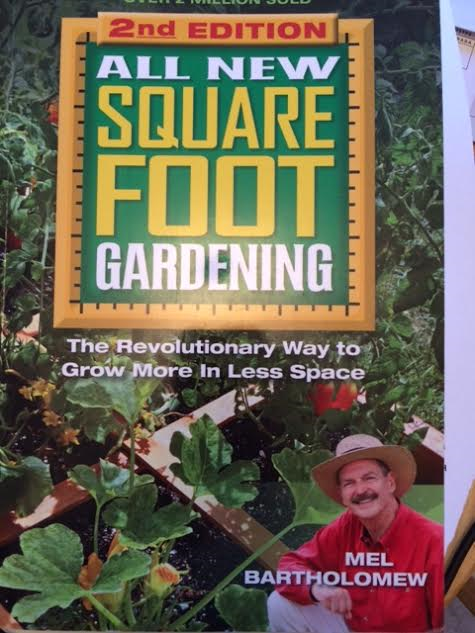
 At my Urban Farming course I learned about this guy and I have planned my raised beds according to his square foot method. My blog will be a test run of how it goes. Should be fun.

In closing, I really believe that every backyard and balcony can play a part in building biodiversity and helping our planet. It's not just the big things, its the one small act after another.
Daffodils just breaking the surface of the soil.


Tuesday, July 28, 2015

Summer garden


I have just got back from a wonderful trip to England and Scotland. We got to see my niece Molly graduate from her primary school and was so glad to be a part of that. The joy and sadness of long distance family!
 It rained every day in Scotland, but was a fantastic experience. Thanks to our good friend Trish Jones, who was our tour guide par excellence, generous host and she even found me a doctor when I got sick. We are truly blessed to have such a good friend as part of our life. This is a picture of a Great Blue Heron taken on the river behind Trish's home at Bridge of Allan.
 As I said it was a wonderful trip, with lots of wonderful memories and we traced both our family roots. All of which are Scottish on Wendy's side and also mostly on mine, much to my surprise.
 Summer Flowers in bloom, bee's everywhere.

I got home just yesterday and am still jet lagged but have spent much of the day in my summer garden. My daughters watered it while I was away, (thank you, thank you) but still, with this heat it was a dry place when I got home.
A garden in late July is quieter then spring. The birds are far less vocal, the burst of spring green has faded to a more sedate colour, but the garden is in its summer glory.
Purple Cone Flowers
My cone flowers are in full bloom, as is my bee balm, daisy's and butterfly bush. And the first harvest is in, tomatoes and my first purple carrot! Some of potatoes have all died back and I just picked the first of them. I will plant beans, peas and carrots in the empty spaces, so I should get a second harvest in the fall.

A summer garden also means that a lot of the work is behind you, its time to sit back and literally smell the roses. We live in a culture that doesn't encourage just sitting and looking, but that's what I did this morning. Just sat and watched and listened to my garden. One of the gifts of my sabbatical has been the time to sit and think and pray in my garden. I now know this patch of earth and its plants and other inhabitants in a much deeper way then I ever have before. That's the gift of sitting, watching and thinking. This process leads to questioning and learning  It is the same with the church, I have been so busy doing church that I haven't had time to ask the question about what the church should actually be in this time. I am still thinking about that, a lot. And my thoughts are leading me to a very different place from the current status quo. My research and reflection continue, and I sit in my garden and listen to what creation has to say to me.